

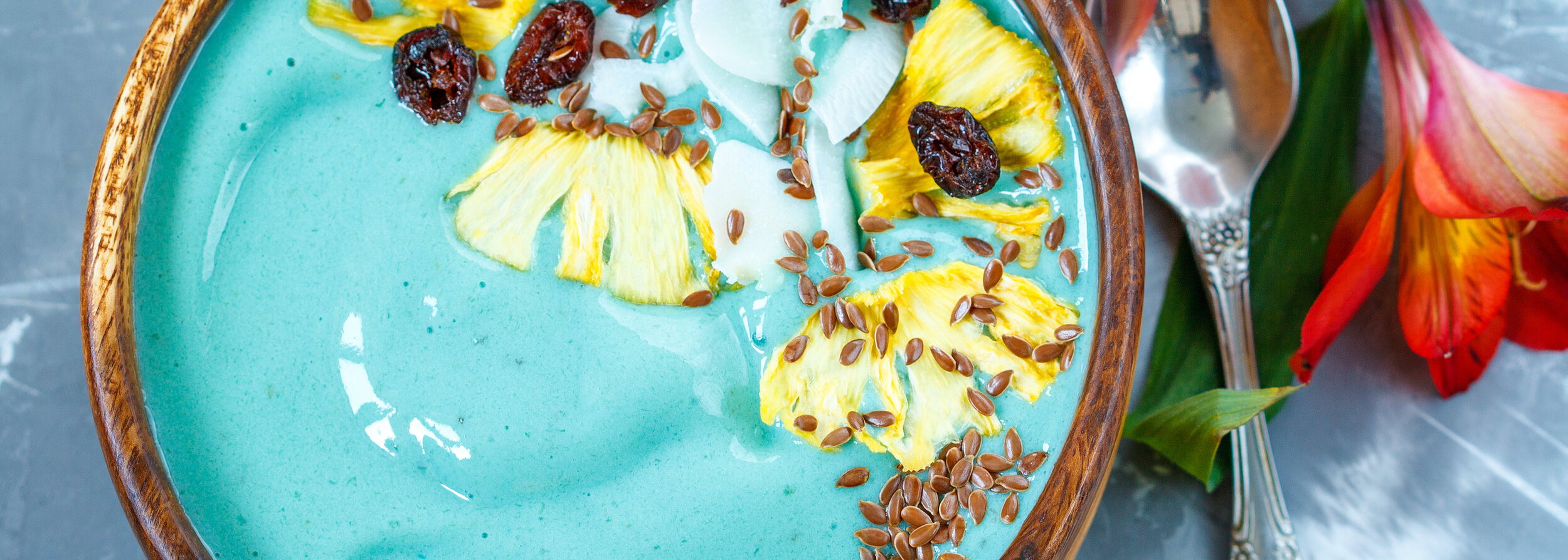


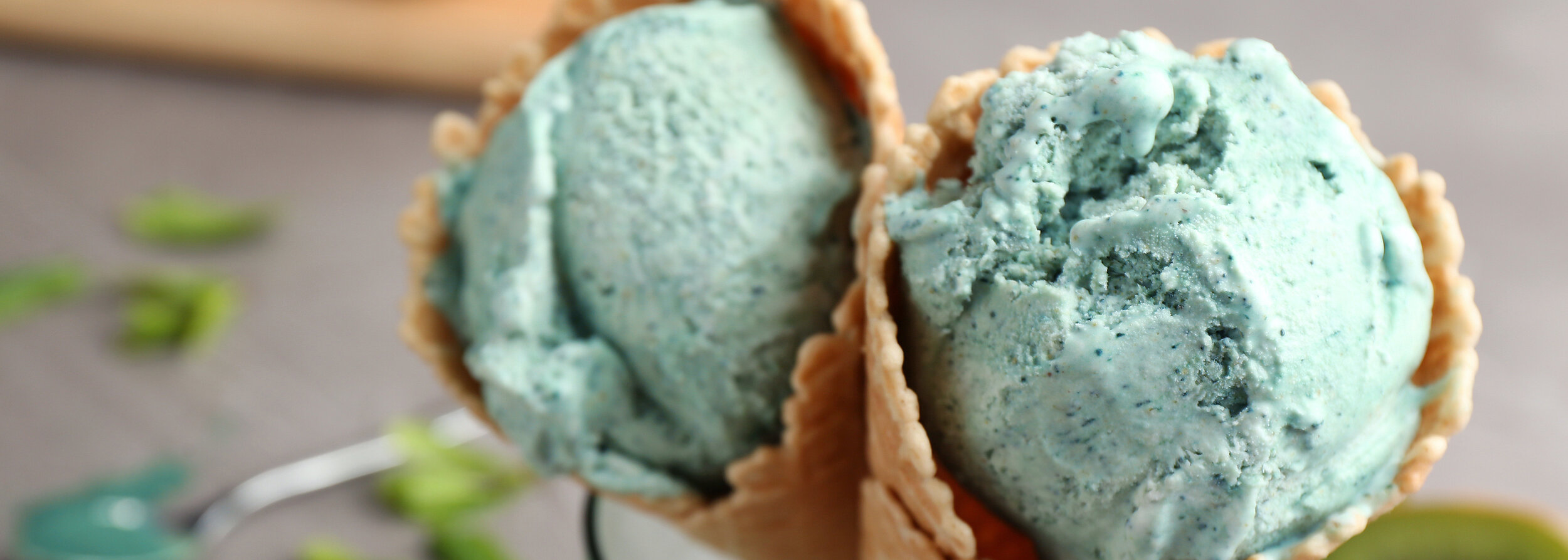
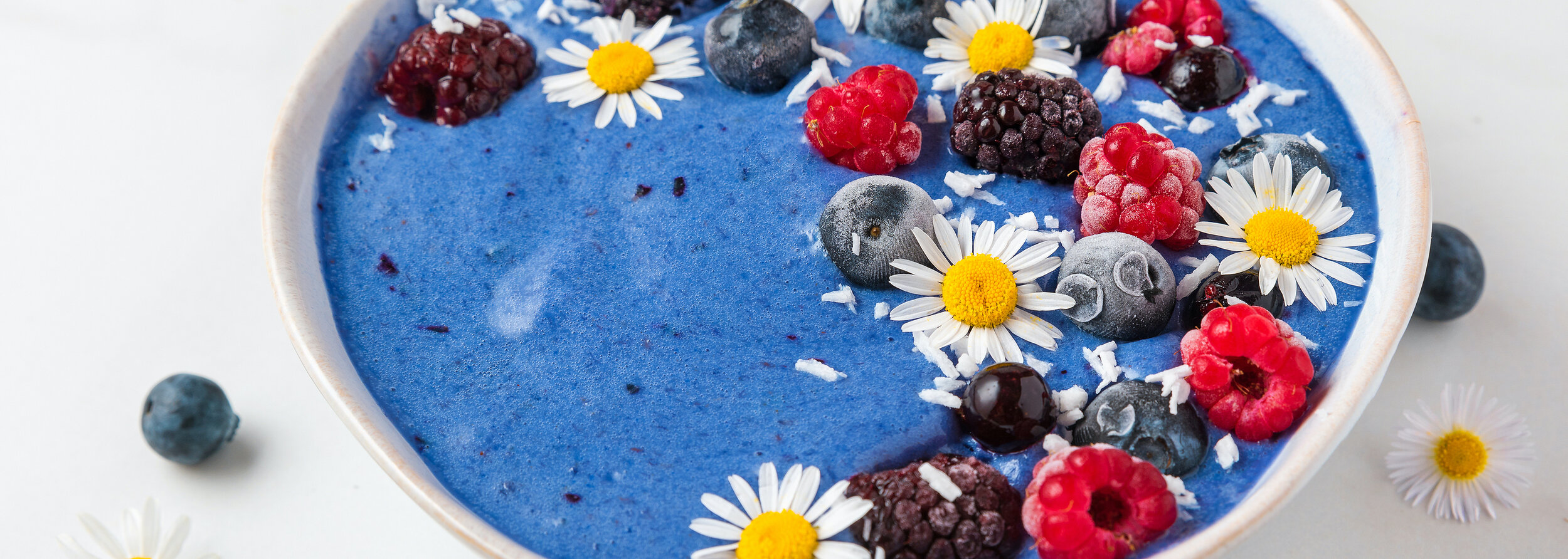
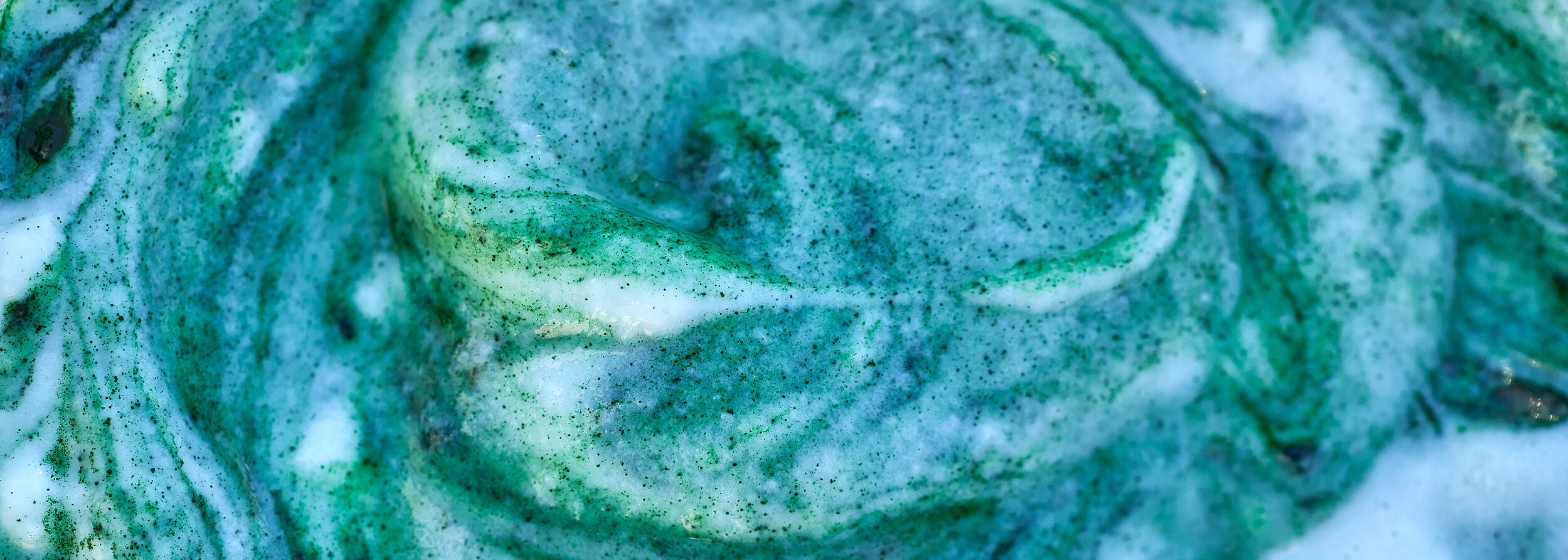
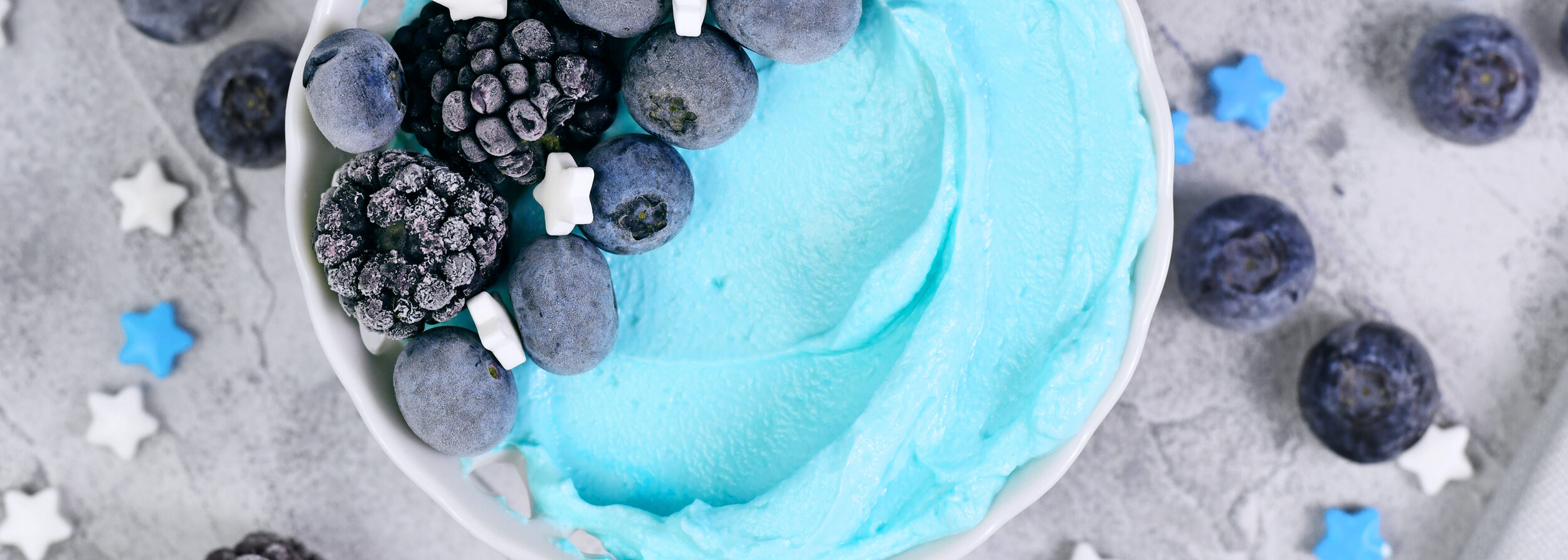
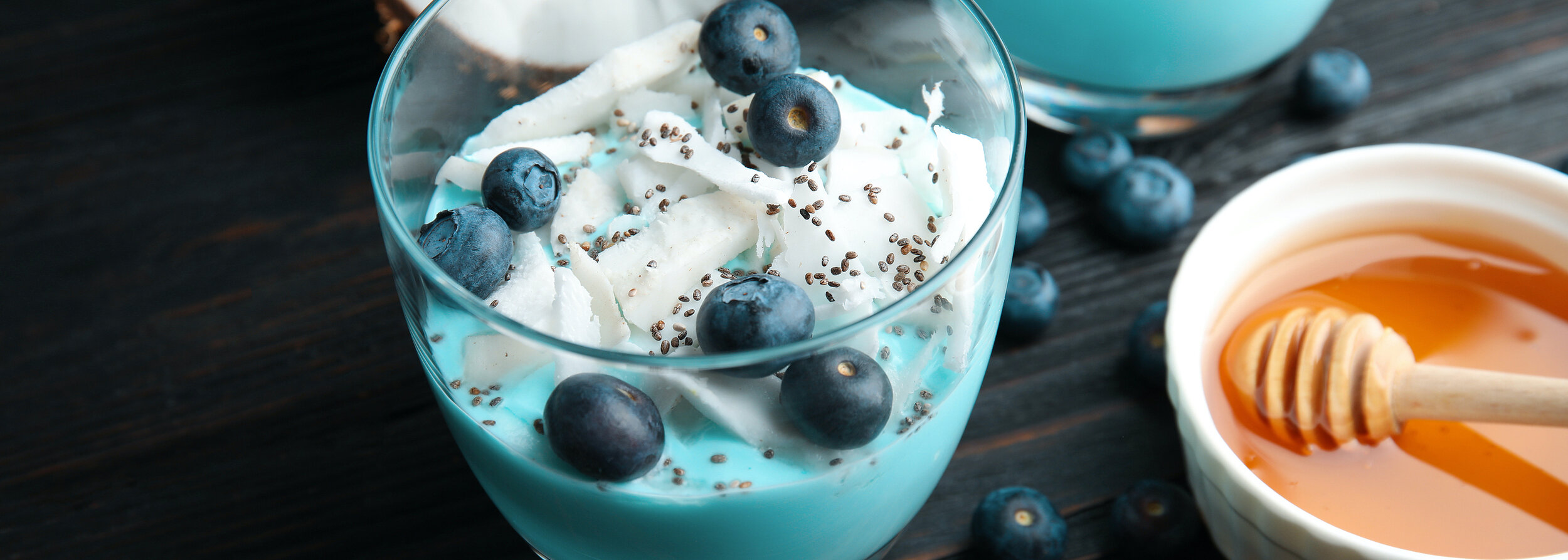









Spirulina Extract is obtained by the aqueous extraction of the dried biomass of the blue-green algae, Arthrospira platensis. The algae is cultivated in carefully controlled ponds, and harvested as a green biomass. Spirulina is composed of chlorophyll, carotenoids, tannins, and the blue pigment, Phycocyanin. It is the blue phycocyanin which is completely water soluble and provides the bright blue colorant. The remaining pigments are oil soluble or insoluble, which further allows for a very straightforward extraction and separation production process.
Spirulina Extract is allowed for the following applications: confections (including candy and chewing gum), frostings, ice cream and frozen desserts (including non-dairy frozen dessert), dessert coatings and toppings, beverage mixes and powders, yogurts (including non-dairy yogurt alternatives), custards, puddings (including non-dairy puddings), cottage cheese, gelatin, breadcrumbs, ready-to-eat cereals (excluding extruded cereals), alcoholic beverages with less than 20 percent alcohol-by-volume content, non-alcoholic beverages, seasoning mixes (unheated), salad dressings, condiments and sauces, dips, coating formulations applied to dietary supplement tablets and capsules, at levels consistent with good manufacturing practice, and to seasonally color the shells of hard-boiled eggs, except that it may not be used to color foods for which standards of identity have been issued under section 401 of the Federal Food, Drug, and Cosmetic Act, unless the use of the added color is authorized by such standards.
It is available in liquid and powder forms and is most stable in those applications where there is minimal heat and the pH is greater than 4.5.
Applications
Confectionery
Frostings
Ice Cream
Frozen Desserts
Dessert Coatings/Toppings
Beverage Mixes/Powders
Yogurts
Custard
Puddings
Cottage Cheese
Gelatin
Ready to Eat Cereals
Supplement Tablet/Capsule Coatings





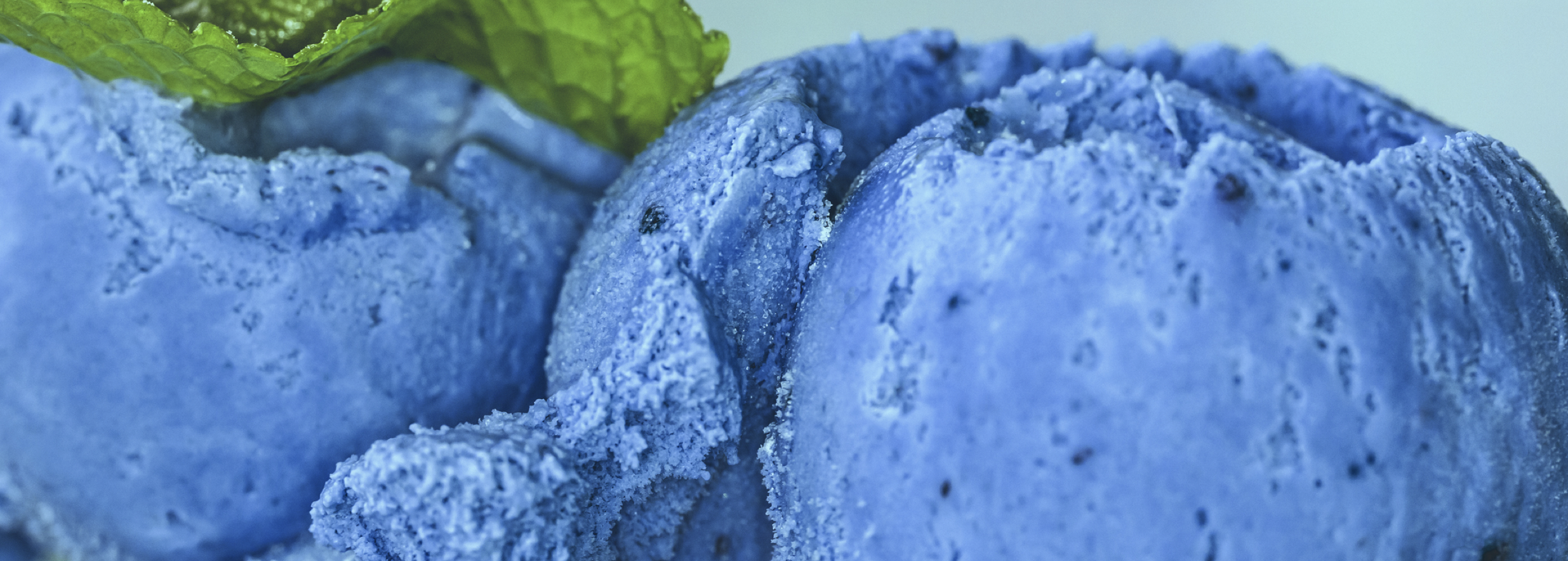



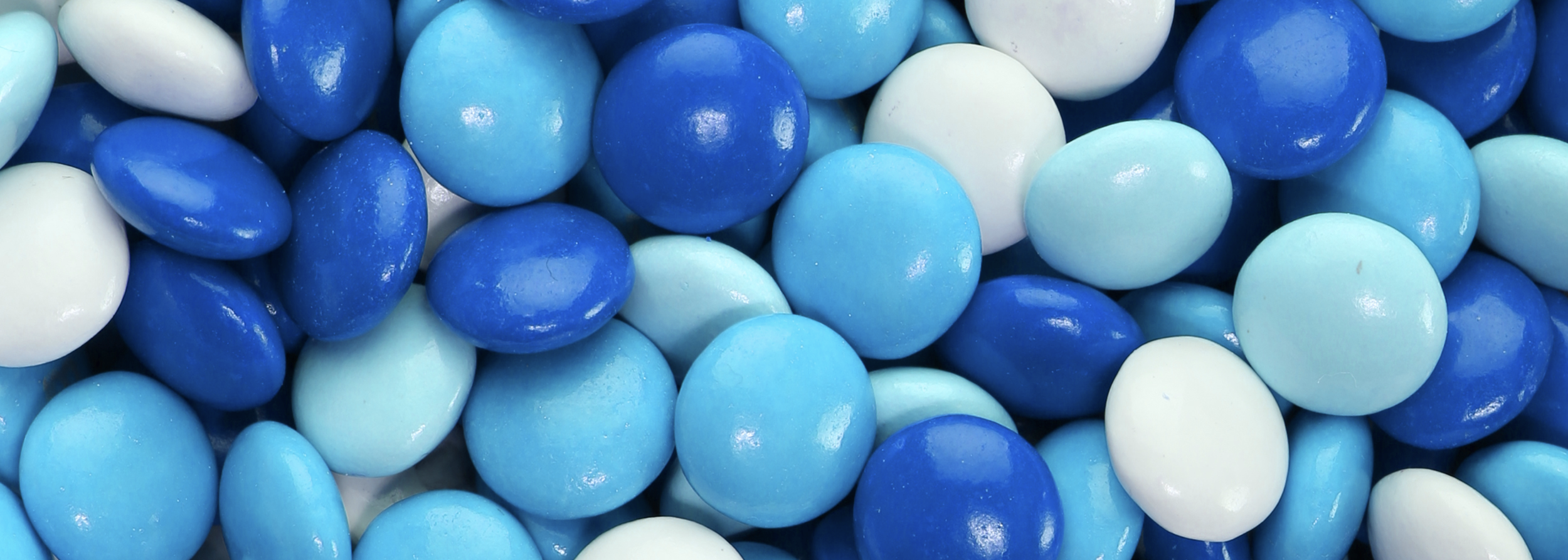
Jagua (genipin-glycine) Blue is a dark blue color which is prepared from the juice of the unripe fruit of Genipa americana by reacting the genipin in the juice with glycine using mild heat. The color contains the genipinglycine polymer as the principle coloring component and three dimers as minor coloring components, which are also blue and present at low levels.
Jagua is grown in South America, Central America and southern Mexico. When fully ripe, the fruit is edible raw or cooked, and is used locally to prepare jams, ice cream, juices and wines.
Jagua Blue is water soluble and unique in that it is not sensitive to changes in pH. It is also very heat and light stable which allows for it to provide deep blue shades for a wide range of applications. It can also be used with red shades to provide very bright and stable purple shades.
Jagua (genipin-glycine) Blue was approved and listed as an exempt from certification color in 2023. It can be safely used to color: flavored milk; dairy drinks and substitutes; dairy and dairy alternative yogurt; ice cream, frozen dairy and dairy alternative desserts, puddings, gelatins, ices, sorbets; ready-to-eat multicolored cereals, flavored potato chips, tortilla, corn, and other chips; candy and chewing gum; non-alcoholic fruit based/ flavored drinks, nutritional beverages and smoothies; flavored cream cheese based spreads; and icings, frostings, jams, syrups, and fruit toppings and fillings, provided the amount of jagua (genipin-glycine) blue does not exceed levels consistent with GMP (21 CFR 73.225).
Applications
Dairy Drinks
Yogurt
Ice Cream
Frozen Desserts
Puddings
Gelatins
RTE Cereal
Chips
Candy
Chewing Gum
Beverages
Icings/Frostings
Jams/Syrups
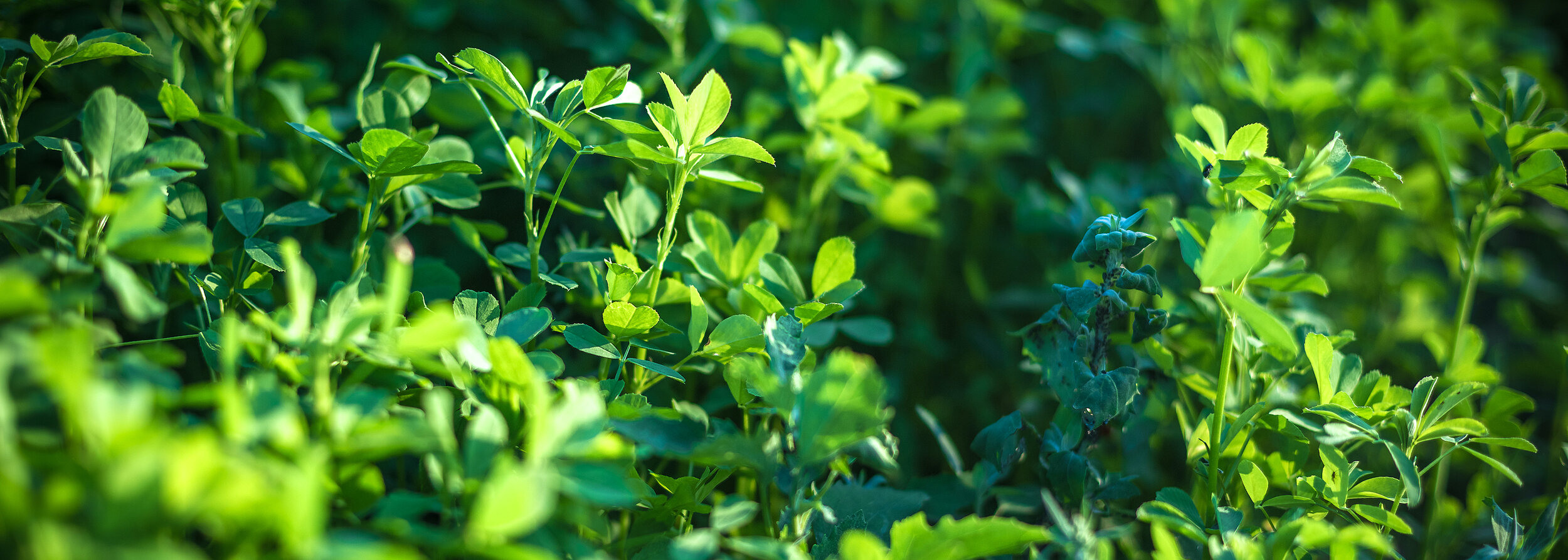
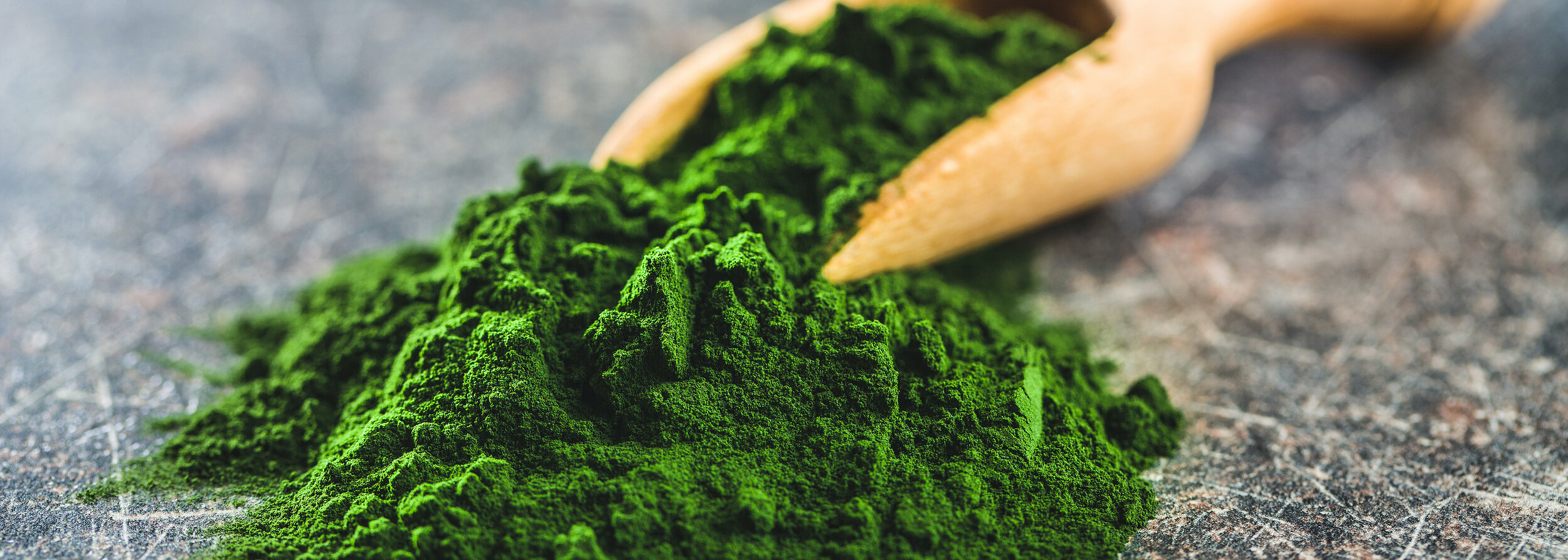
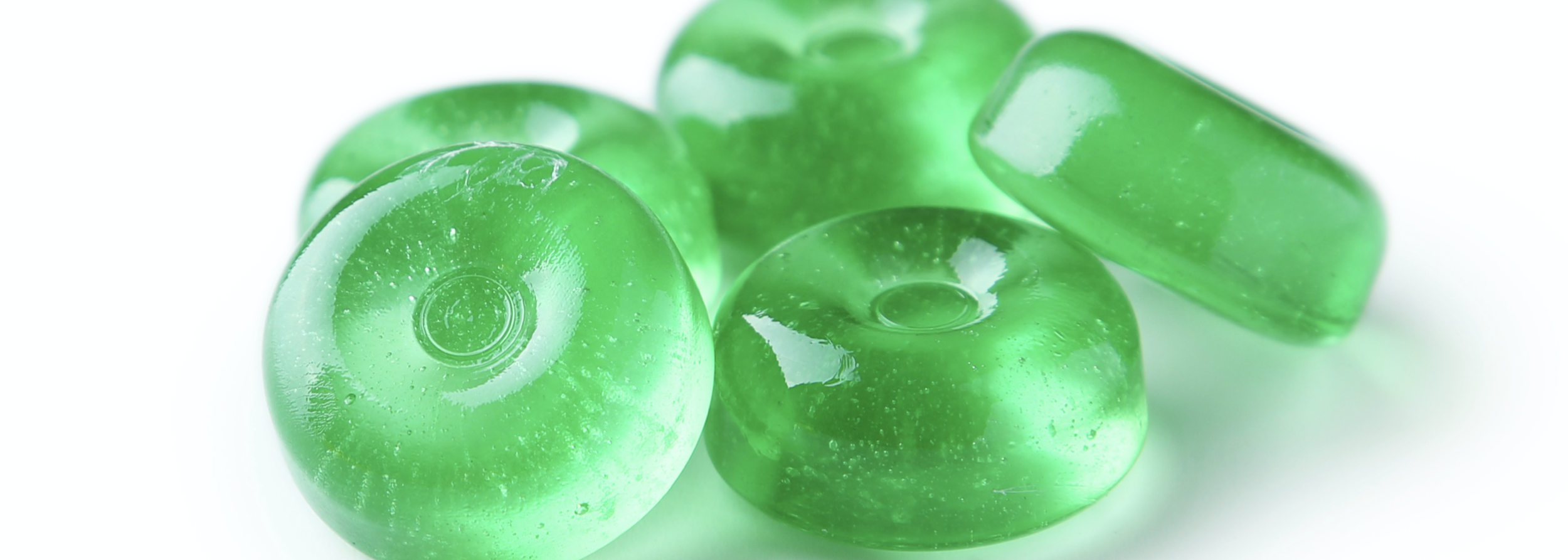
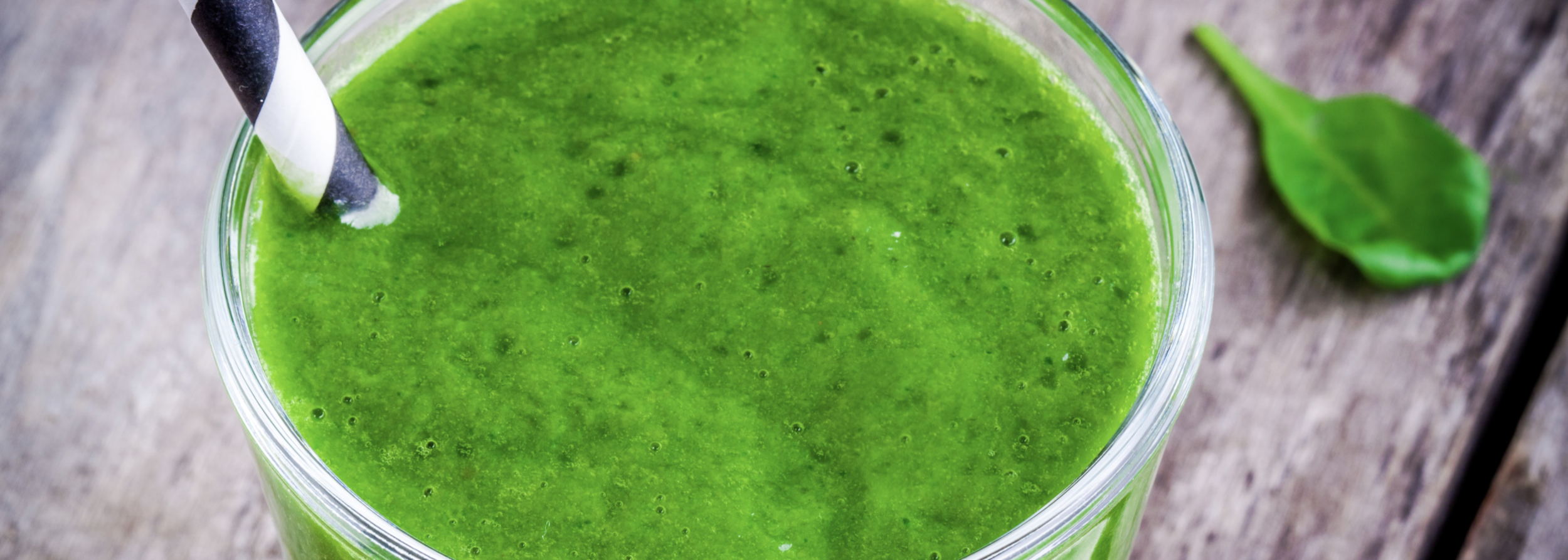
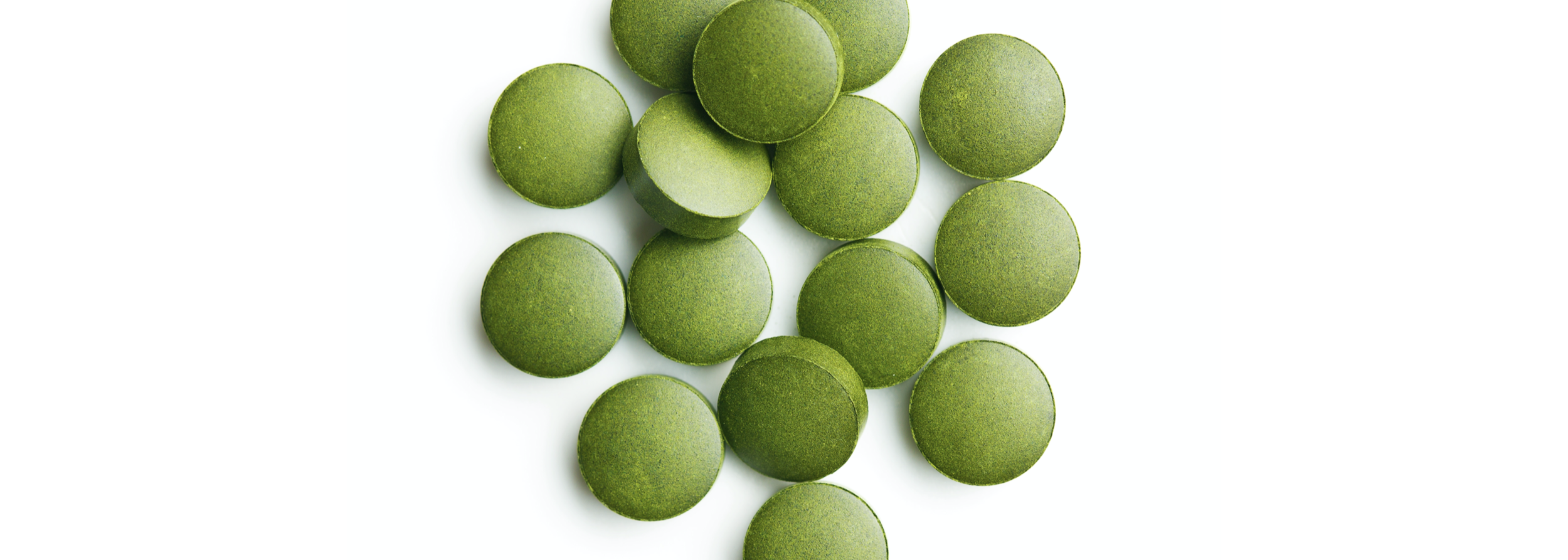


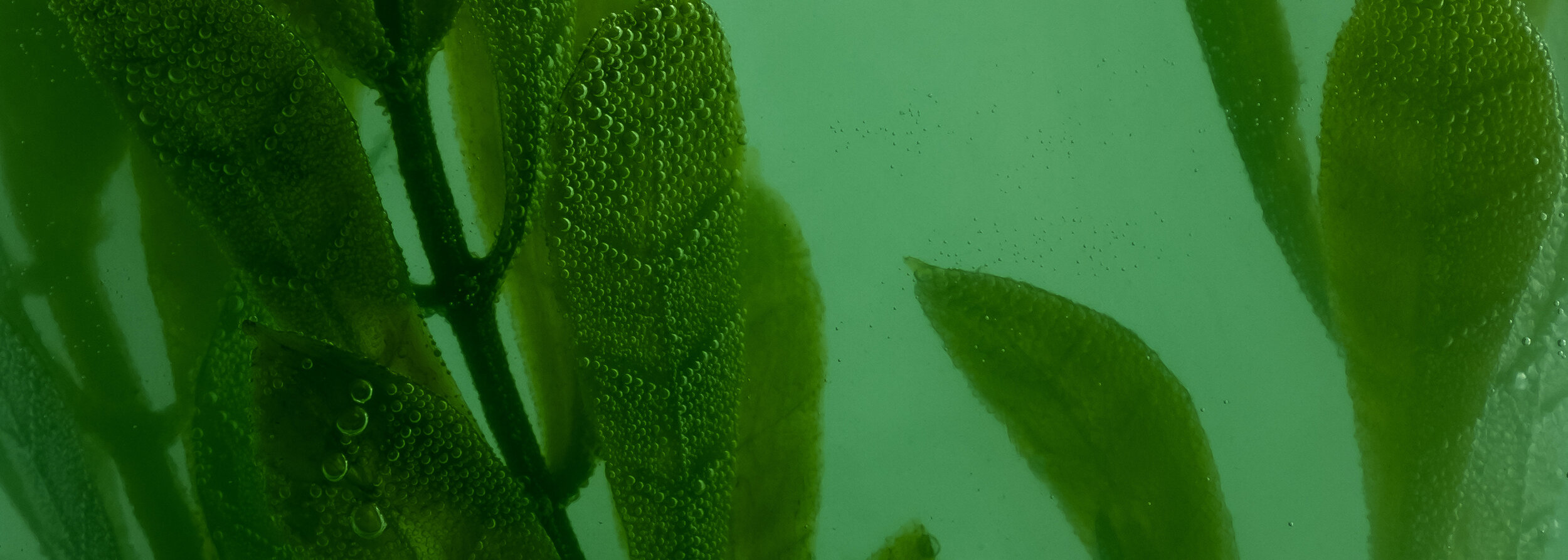
Chlorophyll is an oil soluble pigment which is responsible for the green colors we see in plants and leaves in nature. The commercial forms of chlorophyll are typically obtained from sources such as grass, nettle, alfalfa and spinach.
In application, chlorophyll provides an olive green type of shade. In order for it to be used in water based applications, it must undergo a saponification type of reaction with copper (and sodium or potassium), which creates the chlorophyllin forms which are water soluble, including sodium copper chlorophyllin.
While Chlorophyll and its Chlorophyllin derivative forms are used widely globally, it is the Sodium Copper Chlorophyllin product which is allowed in the US, but only for dry citrus based beverages. Further, potassium sodium copper chlorophyllin may be used for coloring dentrifices, under the CFR Drug and Cosmetic regulations, respectively.
Chlorophyll may also be formulated into emulsions or encapsulated forms, which provide additional application capabilities and additional stability in a wide range of applications, where allowed.
Applications
Dry Beverage Mixes